A New Deal for Zion, plank 8 of 18
Progressive Revenue and a Social Wealth Fund
Shift taxes from labor to accumulated power.
The plank in brief
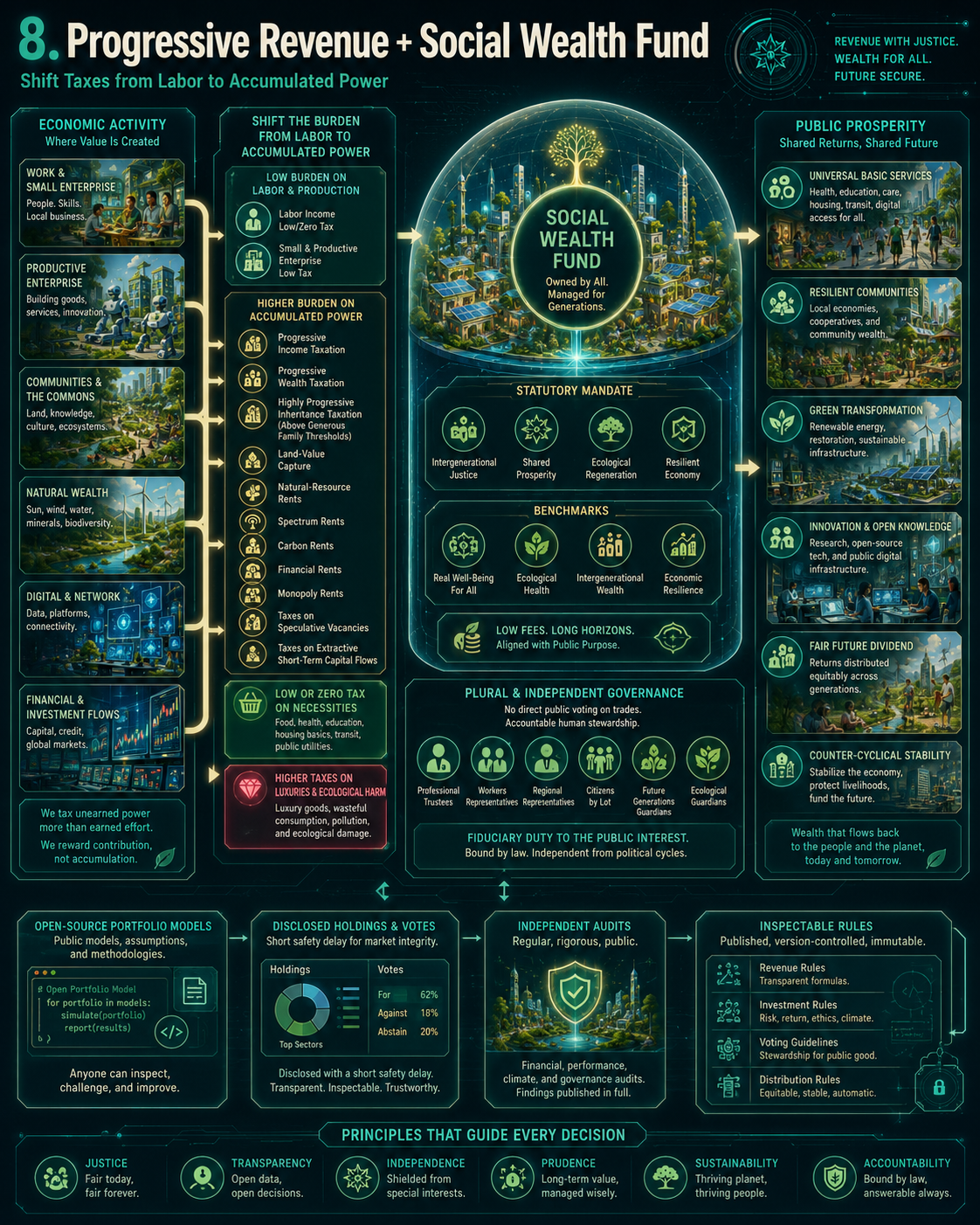
We should tax unearned power more than earned effort. Work, small business, and productive enterprise carry a light load, with low or zero tax on labor income. The weight shifts onto accumulated power: progressive income and wealth taxes, a highly progressive inheritance tax above generous family thresholds, and rents on land value, natural resources, spectrum, carbon, finance, and monopoly. Speculative vacancies and extractive short-term capital flows get taxed. Necessities like food, health, education, basic housing, transit, and utilities carry little or no tax, and luxuries and ecological harm carry more. We reward contribution, not accumulation.
Part of that revenue builds a social wealth fund, owned by all of us and managed for generations. By law its mandate is intergenerational justice, shared prosperity, ecological regeneration, and a resilient economy, and it’s judged by real well-being and ecological health, not just returns. The public doesn’t vote on trades. Governance is plural and independent: professional trustees alongside worker and regional representatives, citizens chosen by lot, and guardians for future generations and the living world, all bound by a fiduciary duty to the public and shielded from political cycles. The fund is transparent by design: open-source portfolio models anyone can inspect and challenge, holdings and votes disclosed after a short delay, independent audits published in full, and rules for revenue, investment, voting, and distribution that are published and version-controlled. The returns come back as universal services, resilient local economies, green transformation, open research and digital infrastructure, a fair dividend shared across generations, and a buffer when the economy turns down.
Objections and replies
None posted yet. If you have a strong objection to this plank, send it to me. The strongest ones go up here with my reply.
Changes
- November 2026: first published here.