A New Deal for Zion, plank 14 of 18
Jerusalem as an Ecumenical and Civilizational Node
A world city of encounter.
The plank in brief
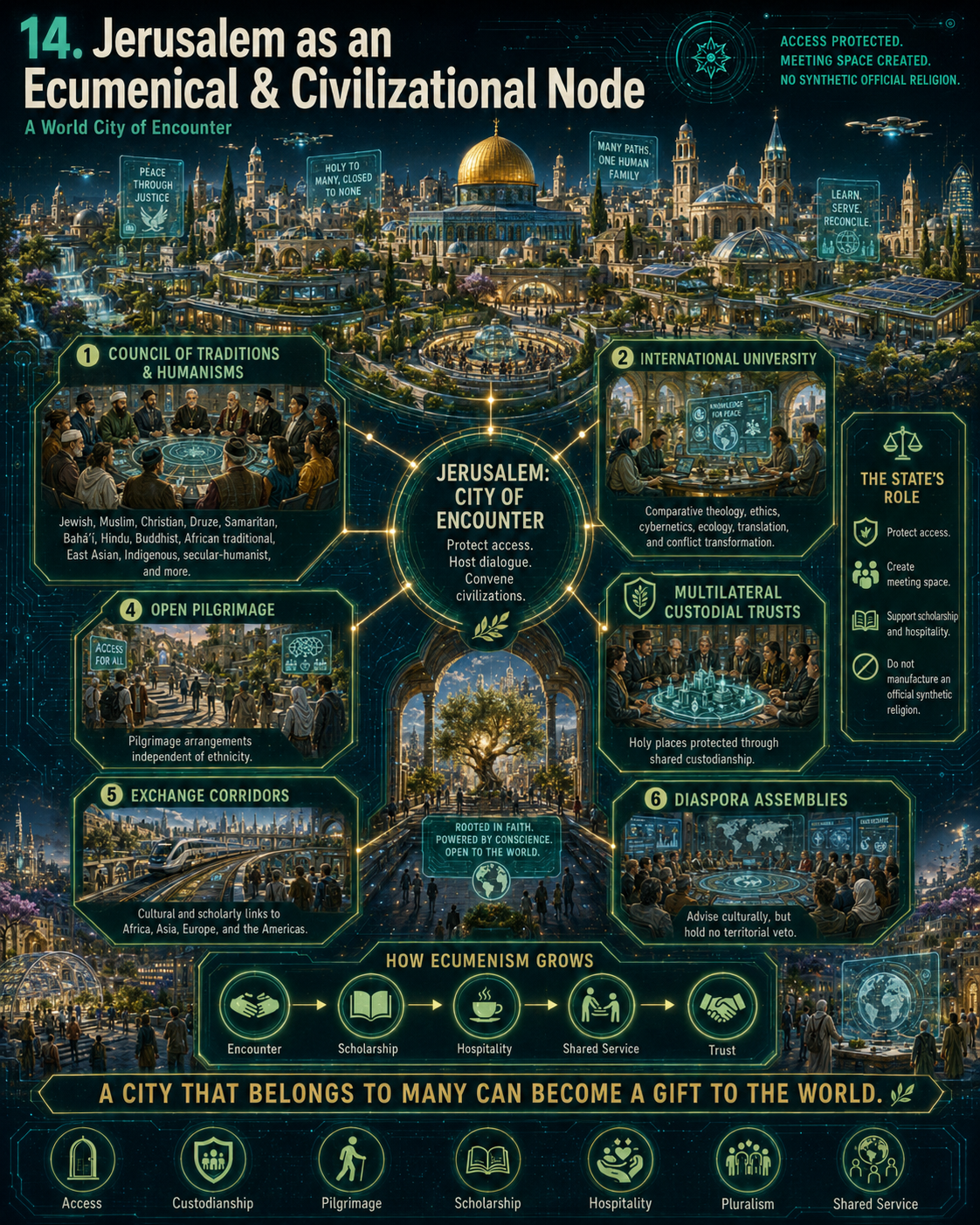
I live in Jerusalem, and I think the city’s future is as a world city of encounter: holy to many, closed to none. Its holy places are protected through multilateral custodial trusts, shared custodianship rather than one people’s control. Pilgrimage is open, and access doesn’t depend on ethnicity. A council of traditions and humanisms brings Jewish, Muslim, Christian, Druze, Samaritan, Bahá’í, Hindu, Buddhist, African traditional, East Asian, Indigenous, and secular-humanist voices, and more, around one table. An international university teaches comparative theology, ethics, cybernetics, ecology, translation, and conflict transformation. Exchange corridors connect the city’s culture and scholarship to Africa, Asia, Europe, and the Americas.
The state’s job here is modest and specific. It protects access, creates space to meet, and supports scholarship and hospitality. It does not manufacture an official synthetic religion, and nobody is asked to blend their faith into someone else’s. Diaspora assemblies, Jewish, Palestinian, and others, can advise on culture, but they hold no territorial veto over the people who live here. Ecumenism grows slowly and in a familiar order: encounter, then scholarship, then hospitality, then shared service, and finally trust. A city that belongs to many can become a gift to the world.
Objections and replies
None posted yet. If you have a strong objection to this plank, send it to me. The strongest ones go up here with my reply.
Changes
- November 2026: first published here.