A New Deal for Zion, plank 12 of 18
Polycentric Ecological Government
Ecology governed at the right scale.
The plank in brief
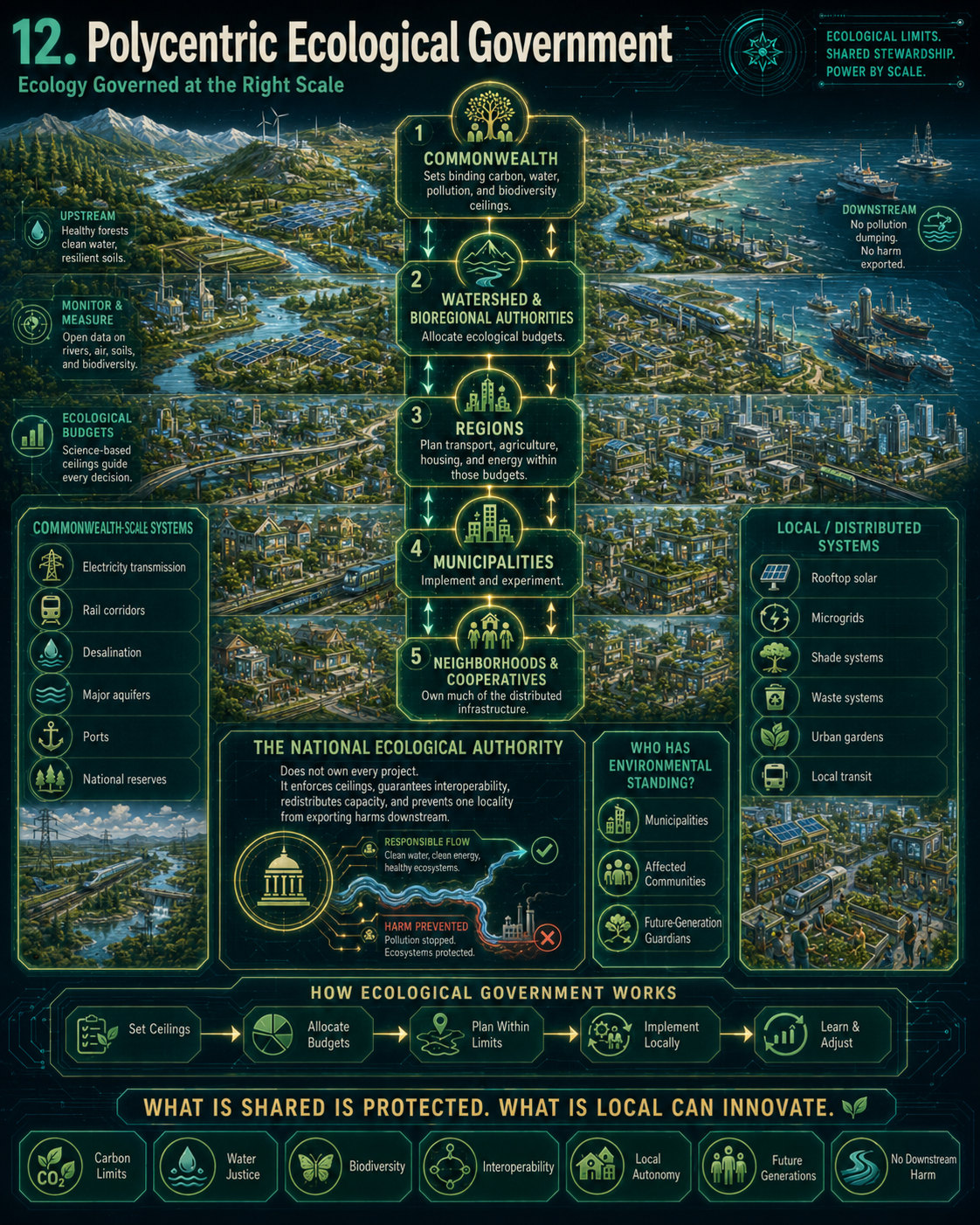
Ecology has to be governed at the scale where the problem actually lives. A river doesn’t stop at a city line, and neither does what gets dumped in it. So responsibility is nested. The commonwealth sets binding ceilings on carbon, water, pollution, and biodiversity loss. Watershed and bioregional authorities turn those ceilings into ecological budgets. Regions plan transport, agriculture, housing, and energy inside those budgets. Municipalities implement and experiment. Neighborhoods and cooperatives own much of the distributed infrastructure themselves: rooftop solar, microgrids, shade, waste systems, urban gardens, and local transit. The big shared systems run at commonwealth scale: electricity transmission, rail corridors, desalination, major aquifers, ports, and national reserves.
A national ecological authority holds it together without owning every project. It enforces the ceilings, makes sure systems can talk to each other, redistributes capacity, and stops any one place from exporting its harm downstream. Healthy forests upstream mean clean water and good soil below, and nobody downstream should inherit someone else’s pollution. Open data on rivers, air, soil, and biodiversity keeps everyone honest, and municipalities, affected communities, and guardians for future generations all have legal standing to defend the environment. The cycle is simple: set the ceilings, allocate the budgets, plan within the limits, implement locally, then learn and adjust. What we share gets protected. What’s local gets to innovate.
Objections and replies
None posted yet. If you have a strong objection to this plank, send it to me. The strongest ones go up here with my reply.
Changes
- November 2026: first published here.